
It would be a misnomer to just call this page "Longreach" because it covers less of the town itself, and much more of surrounding districts. These are up to 400km away, but then again, Queensland is a bloody big state (three times bigger than Texas, to those that think the American state is big!) and a few hundred kilometers is a mere drop in the Queensland ocean. Longreach itself, the town (pop: 3000) started out as an outstation of the enormous Mount Cornish cattle station, and was named because it lies on a long reach of the Thomson River. It was officially gazetted in 1887, with the railway reaching there in 1892. Of course, before Europeans, that land belonged to the Iningai people whose tongue was Kuunkari.
In Longreach, we stayed at the Saltbush Retreat whose website describes itself as having "rustic but beautiful accommodation reflecting the unique textures and tones of Outback Queensland". Ours were the 3.5 star Outback Cabins, which were perfectly adequate, and there are two levels of more upmarket accommodation. Saltbush is very near to both the Qantas Founders Museum and the Australian Stockman's Hall of Fame. Both good reasons to come here, and Saltbush is certainly worth considering if you are planning to do so!
Qantas still flies to Longreach...
Global airline it may now be, but the Qantas Founders Museum is in Longreach in way-outback Queensland. Qantas certainly supports the museum — financially, logistically, and symbolically — but the museum`s governance, curatorial decisions, and storytelling are independent of the company, and belong to the community via a community based charitable trust company.
The Museum is large and sophisticated and built around the idea of telling the story of Qantas from the ground up (being independent, warts and all) — literally from the outback soil where the airline began. The exhibits focus on the founders, the early aircraft, the challenges of operating in remote Australia, and the evolution of Qantas from a tiny bush service to an international carrier. The tone is historical rather than corporate: lots of personal stories, artefacts, and context about life in western Queensland in the 1920s and 30s.
Our guide, a knowlegeable and garrulous gentlemen called John, was so entertaining that we hope he stays on in this job for a long time! Truth is, he is probably a volunteer. John summarised the founding history of the Queensland and Northern Territor Aerial Service as [paraphrasing] "conceived in Cunnamulla, born in Winton and came of age in Longreach". In Cunnamulla, a car belonging to former airmen broke down. Thus frustrated, they conceived, plotted and registered an outback air service, and based it in Longreach due to the railhead there. The museum's collection of aircraft is outstanding: Boeing 747 & 707, DC-3, Catalina, all on display in a community-funded roofed, unwalled shed, that they call an airpark.
Qantas, through Qantaslink, still has regular scheduled services to Longreach from Darwin. We doubt if this route is highly profitable for the airline, but to abandon it would be a PR disaster. Picture the headlines! Longreach is so interesting, and there is more to see here than we had time for (too busy chasing birds), so it's good to know we can fly here!
Mitchell Grass Downs...
Once you leave the Mt Isa area, the long run from Cloncurry to Winton is along the Landsborough Highway and consists of almost entirely wide, treeless plains, pale-gold grasses rippling in the wind, and a sense of enormous horizontal space that characterises western Queensland. Regionally, this is the Mitchell Grass Downs. McKinlay is one of the few dots of civilisation along that stretch, a friendly interruption in a ancient landscape that is open and quietly magnificent. McKinlay wears its fame lightly — it's a speck on the map with a pub that is somehow larger than life. The Walkabout Creek Hotel rests on its Crocodile Dundee laurels, offering travellers the pleasure of stepping into a movie myth while enjoying a cold beer in a place that is as cheerfully unpretentious as the outback itself.
Bladensburg National Park...
Driving south from Winton on bush tracks, we entered the Bladensburg National Park, and a birdwatcher's paradise. It feels so different from the flat grasslands around Winton as the Mitchell Grass Downs transitions into the outback's harder, older geology, a landscape of ironstone ridges, broad valleys and those classic outback colours that make Bladensburg such a striking place. We stopped numerous times when various birds were sighted by alert and sharp-eyed spotters. The Lightroom photo map shows not only where we went on that day, but also the clear transition between regions.
Near Lark Quarry is Opalton, a mere 100km+ on a 4WD track. Once a bustling field during the late 19th and early 20th-century opal rushes, it's now a near-deserted scattering of diggings, shacks, mullock heaps and stubborn dreamers who still chase colour in the stone. The country around it is classic Winton hinterland: dry, stony, sun-blasted, with jump-ups on the horizon and a silence so complete you can hear the wind shift. Diverting to here added about 200km to a hard driving day, but it yielded a few more birding opportunities.
The Steps of Dinosaurs...
Lark Quarry is one of those rare places where the ancient suddenly feels close enough to touch. Around 95 million years ago, a mixed mob of small ornithopod dinosaurs gathered at the edge of a muddy lake. Then a large theropod predator startled them. What followed was chaos: dozens of animals bolting in different directions, slipping, skidding, colliding, leaving behind a dense tangle of footprints that captured a moment of panic with astonishing clarity thus producing the only dinosaur stampede site in the world. You can see the difference between the tiny chicken-sized runners, heavier plant-eaters, and maybe the single large carnivore whose presence seems to have triggered the stampede. The site sits in rugged country southwest of Winton, and is protected under a purpose-built shelter that keeps the tracks stable and visible. Standing there, listening to the guide, you realise you're looking at footprints pressed into soft mud by living animals — a fleeting moment from the Cretaceous, held intact across a hundred million years. An excellent guide in the "shed" was entertaining and informative. He described the mistakes made in the design and construction of the protective enclosure. Our group, being keen to track down more birds, we did not take the time do the marked 3km walk around the site.
Discovery of the stampede was accidental. An alert local station worker in the 1970's, named Malcolm Mackenzie, noticed unusual markings on a slab of rock exposed near Lark Quarry (an early 20th century sandstone quarry) while mustering cattle. He reported it to scientists at the Queensland Museum, who recognised the impressions as dinosaur footprints. Excavations followed, revealing a dense patch of tracks — more than 3,000 individual prints — that told the story of a stampede. So, rather than being excavated deliberately for fossils, the site was found because erosion had just begun to uncover the upper surface of the ancient lake-bed. The protective layers above had done their job for nearly 95 million years, but once exposed, conservation became a priority. McKenzie's discovery deserves more recognition - a humble station worker found one of the most famous fossil sites in the country, a reminder that science often advances thanks to people who simply pay attention to what`s around them.
The site has a fascinating an eventful modern history. A shed was constructed to protect it. An earthwall collapse early on in construction briefly buried part of the track surface before restoration. A welder working in the ceiling accidentally set fire to hay spread out below for protection. But the building exists, it provides vital protection, and all the construction scars are there to see.
Water Treatment Plant...
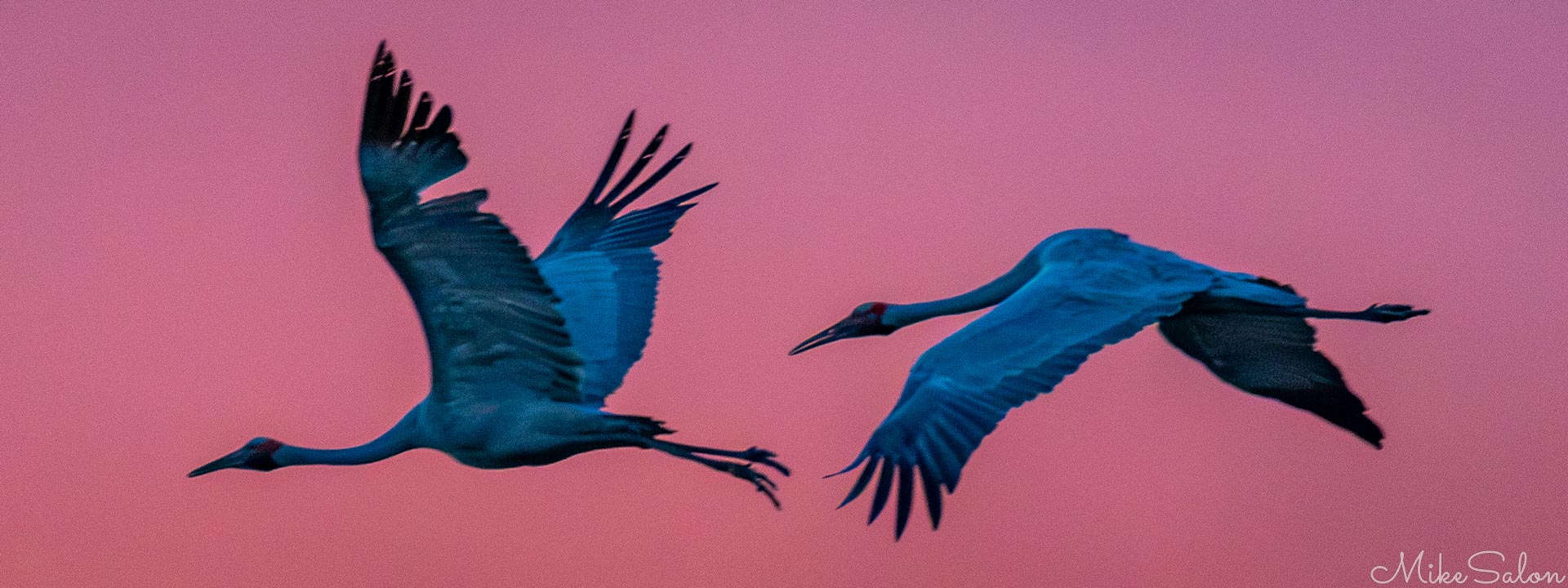
Water treatment plants like Winton's often become unexpected sanctuaries for wildlife, especially birds. The combination of reliable water, nutrient-rich runoff, and open surrounding habitat creates a micro-ecosystem that contrasts sharply with the dry country around it. At Winton, the treatment works sit amid Mitchell Grass plains, where natural water is scarce for much of the year. The ponds offer permanent moisture and shelter, drawing everything from Galahs and Brolgas to Woodswallows and raptors. The mix of open water, mud-flats, and nearby trees mimics a natural wetland, and the steady human presence discourages predators. Despite all that, photography and birdwatching was difficult due to the plant's security/safety measures preventing easy access. Birds in the sky were easily seen but those in the reeds and wetlands, just out of sight although a cacophony betrayed their presence.
Footnote, my admission of truth ...
The captions and titles on the images are mine, and I take responsibility for them. But I'm no naturalist, so the identification and descriptions of fauna and flora mostly comes from sources like local guides, Wikipedia, e-Bird, Merlin or artificial intelligence agents like Gemini or Copilot. It is fabulous to have those resources available!